
Yellow and Red Cards
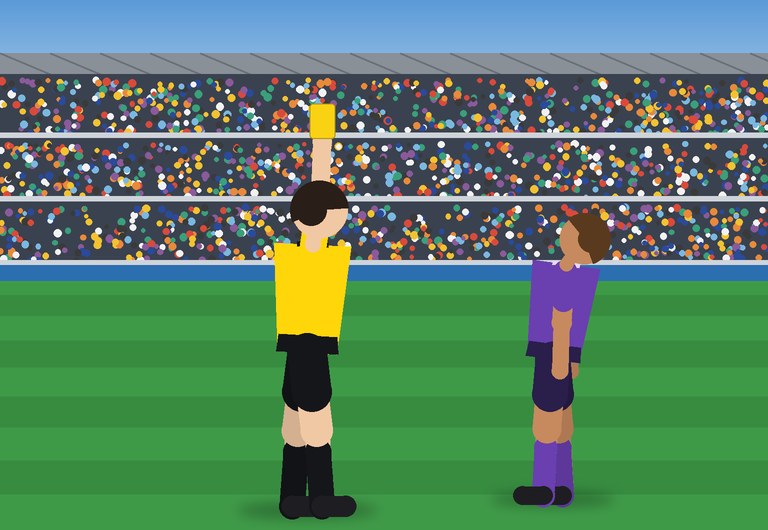
A defender (not the goalkeeper) stops a goal-bound shot with his hand on the goal line. What is your call?
Today a yellow or red card is understood by every player and fan in the world, whatever language they speak. But until 1970, referees had no cards at all. They cautioned and sent off players with words alone.
A problem at the 1966 World Cup
At the 1966 World Cup in England, a quarter-final between England and Argentina caused confusion. The German referee sent off Argentina’s captain, but the player did not understand and stayed on the pitch for several minutes. Some English players only learned from the newspapers that they had been cautioned too.
An idea at a traffic light
Ken Aston, an English referee who was in charge of the tournament’s referees, was driving home from Wembley afterwards. While he waited at a traffic light on Kensington High Street, he had his idea: yellow means “take care”, red means “stop, you are off”. The cards were introduced at the 1970 World Cup in Mexico.
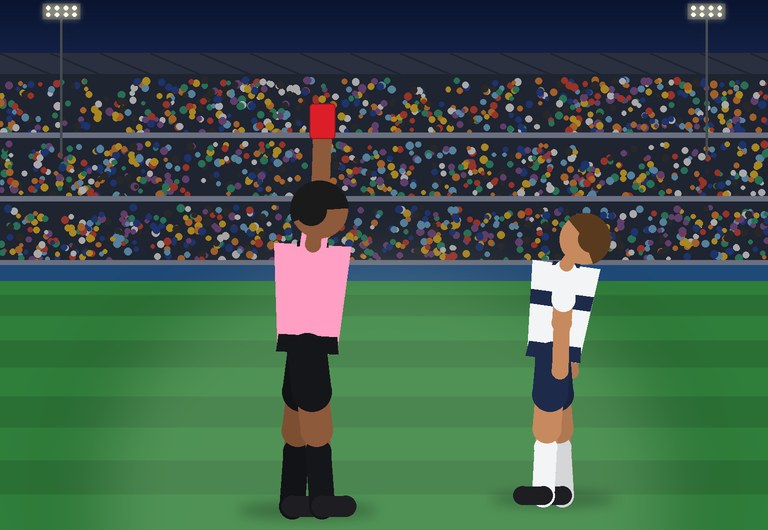
The first red
No red card was shown at the 1970 tournament. The first red card at a World Cup came in 1974, for Chile’s Carlos Caszely in a match against West Germany. Today two yellow cards in the same match also lead to a red card.
Rule card
Idea byKen Aston, England
Inspired byTraffic lights
First World Cup with cards1970, Mexico
First World Cup red card1974
Two yellowsEqual one red card
Referees cautioned and sent off players with words only, which could cause confusion between languages.