
The Offside Rule
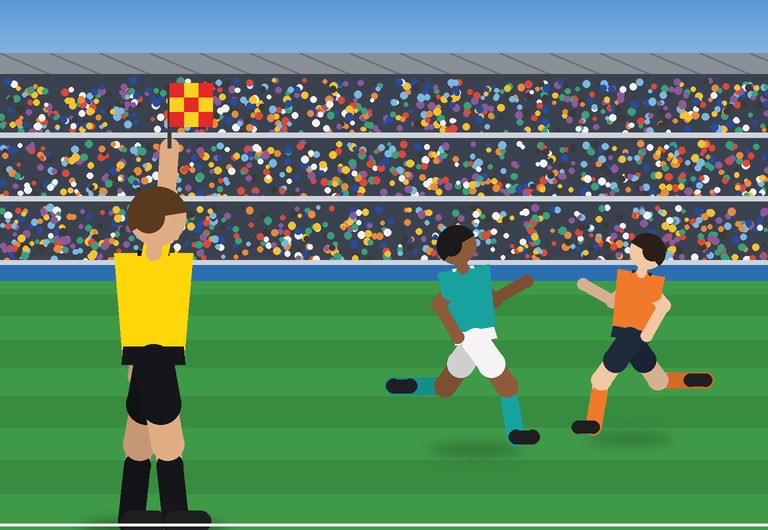
When the pass is played, the attacker is beyond the second-last defender in the opponents’ half. He scores. What is your call?
No rule causes more arguments in football than offside. It exists to stop attackers simply waiting next to the opponents’ goal for a long ball. Over the years it has changed many times.
The early rules
In the first rules of the Football Association in 1863, a player in front of the ball when it was kicked forward was out of play. In 1866 this changed: a player was onside if at least three opponents were between him and the goal line.
1925: from three to two
By the 1920s defenders had become so good at catching attackers offside that many matches ended with very few goals. In 1925 the rule was changed so that only two opponents were needed between the attacker and the goal line. Goals became much more common almost at once.
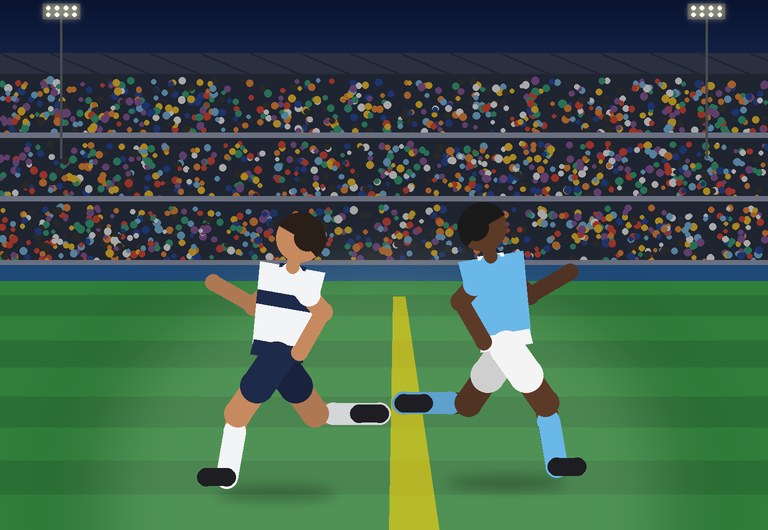
Level is onside
In 1990 the Laws were changed so that an attacker level with the second-last opponent is onside. Later changes made clear that only the parts of the body that can legally play the ball count. Today a player is not offside in their own half, or when receiving the ball directly from a throw-in, goal kick or corner kick.
Rule card
First rule1863
Three-player ruleFrom 1866
Two-player ruleFrom 1925
Level is onsideSince 1990
RestartIndirect free kick to the defending team
An attacker needed at least three opponents between him and the goal line to be onside.