
Video Review
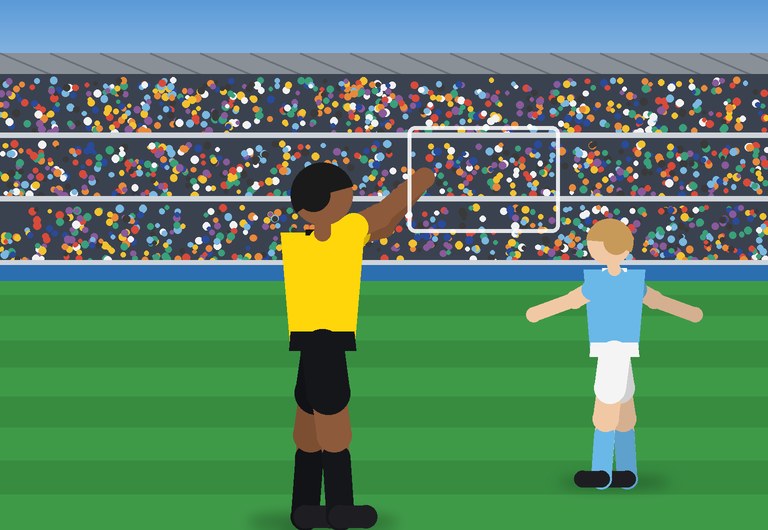
A goal is scored, but replays show the scorer handled the ball just before shooting. What happens?
For more than a century referees had to decide everything in a split second, with no replays. Television showed millions of viewers what the referee had missed. The video assistant referee, or VAR, was introduced to correct the biggest mistakes.
Into the Laws in 2018
After trials in many competitions, the video assistant referee was written into the Laws of the Game for the 2018/19 season. Its first World Cup was in Russia in 2018. The VAR team watches the match on screens in a video room and talks to the referee by radio.
Only four kinds of decision
The VAR does not check everything. It can only help with four kinds of match-changing situations: goals and offences leading to them, penalty decisions, direct red cards and cases of mistaken identity. It steps in only for clear and obvious errors or serious missed incidents.
The final decision
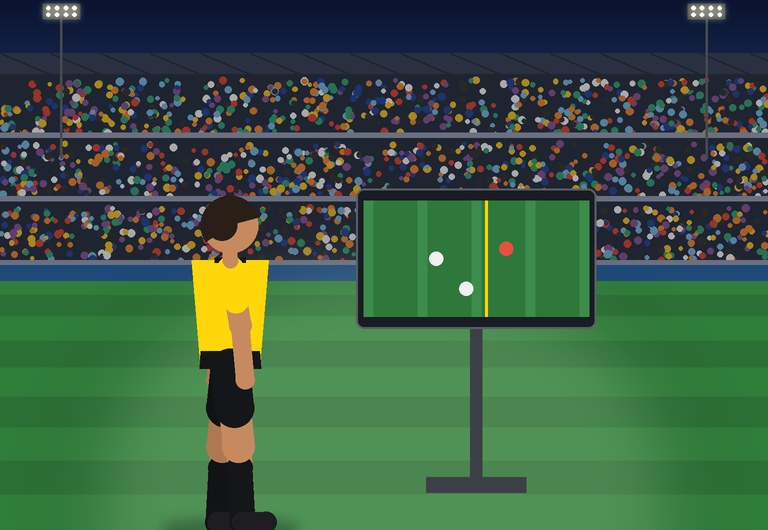
The final decision always belongs to the referee. For some situations the referee goes to a monitor next to the pitch, in the referee review area, to watch the replay before deciding. At the 2022 World Cup, special cameras also helped draw offside lines automatically.
Rule card
In the LawsSince 2018/19
First World Cup2018, Russia
Can checkGoals, penalties, direct red cards, mistaken identity
SignalDrawing a rectangle in the air
Final decisionAlways the referee
The referee’s decision on the pitch was final, even when TV replays showed a clear mistake.